.png)
We Are an Official Claude Partner

Uliasti is now an official partner for Anthropic's Claude. It is a short sentence that took a lot of shipped projects to earn. Here is what it means in practice.
We have been building with Claude since long before anyone handed out badges: agents that read supplier documents, assistants that draft client letters, engineering work done with Claude Code. The partnership makes official what our clients already experienced. Anthropic knows our work, and when a project needs answers from the source, we have a direct line.
The partnership started with a meeting in person. In January 2026, during WEF week, I was in Davos, where Anthropic had a house on the Promenade. I went in and talked with people from their team about our client work, about what holds Swiss companies back with AI, and about building systems businesses can rely on. We stayed in touch afterwards, and those conversations led to this partnership.
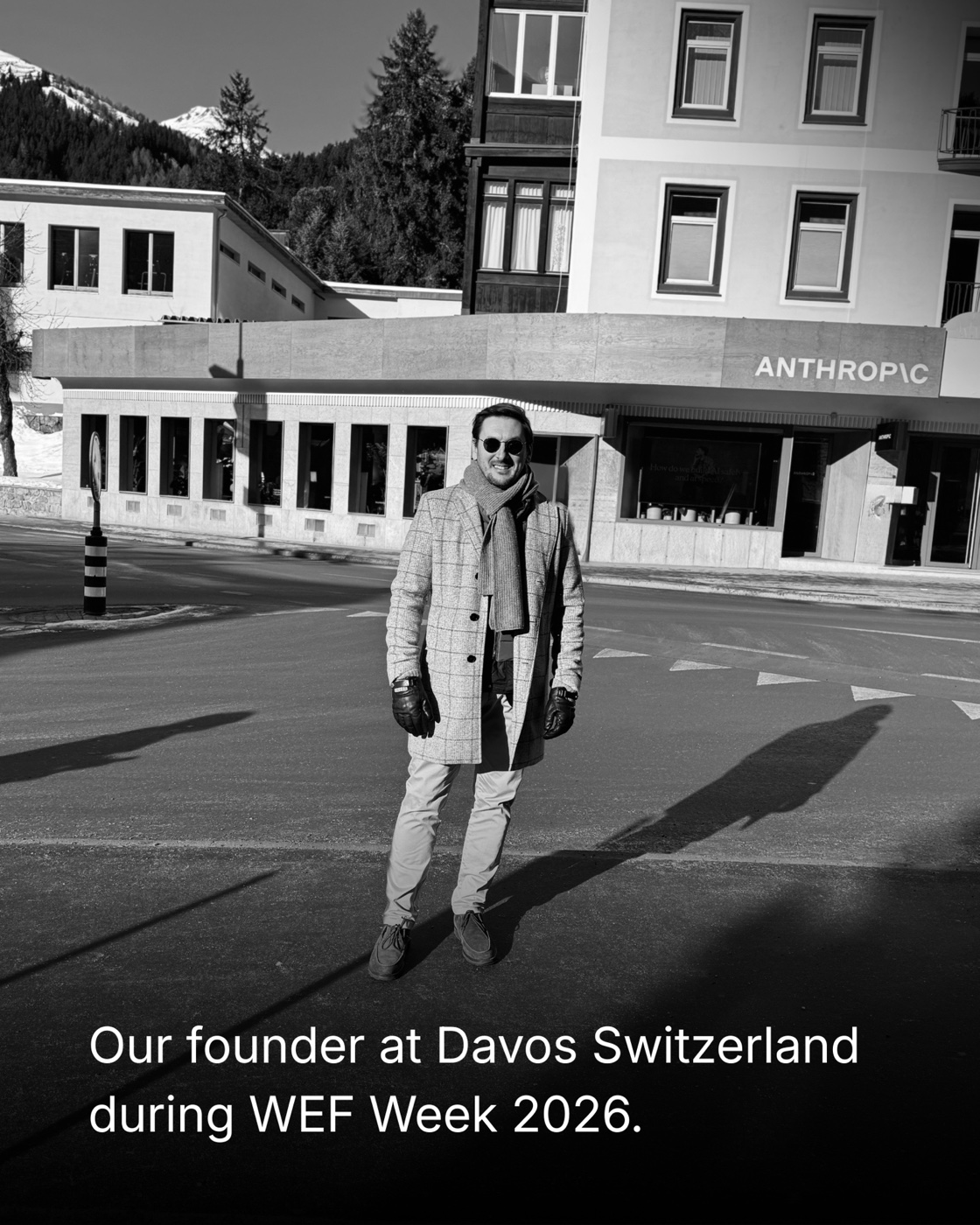
Outside the Anthropic house in Davos, WEF week, January 2026.
Why we chose Claude
Why Claude, out of all the models? Not because of a benchmark chart. Three practical reasons decided it for us. Claude is unusually reliable on long, messy documents, which is what SME work is actually made of. Its behaviour is steady enough to put in front of clients in regulated industries. And Claude Code changed how fast our own engineers ship, which means client projects got faster too.
How we ship Claude into production
A partnership badge does not build anything, though. What matters is how the model gets into your business, and that is where most Claude projects go wrong: they stop at the model.
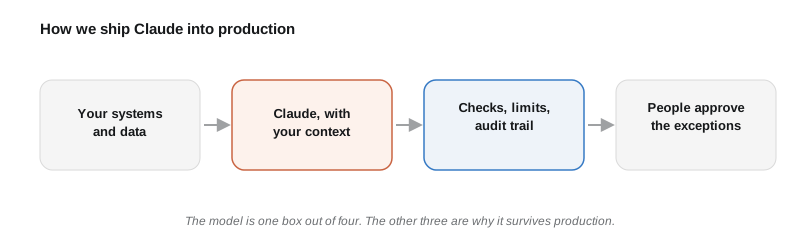
The model is one box out of four. The other three are why it survives production.
Our job as a partner covers the other three boxes. We connect Claude to the systems and documents you already have, so it works with your reality instead of a demo dataset. We wrap it in checks, limits and an audit trail, so every answer can be traced and wrong ones get caught. And we route the exceptions to your people, because a system that knows when to hand over is the one your team ends up trusting.
Which industries benefit from Claude?
Where does this pay off first? Wherever reading, writing and deciding about documents eats the working day.
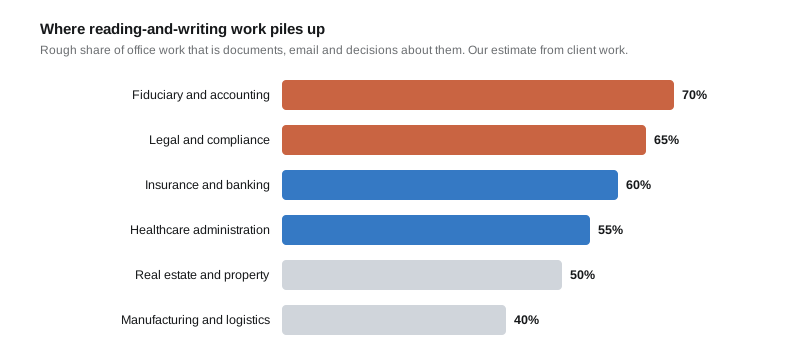
The more of the day is paperwork, the faster Claude pays for itself.
For fiduciary and accounting firms, Claude reads what their people read all day: receipts, contracts, bank statements, the client email with three questions buried in paragraph four. We build systems that sort, extract and pre-book, with an accountant approving instead of typing.
For legal and compliance teams, it is first drafts and first reads. A contract summarised against your playbook, a policy checked against the new regulation, with every claim linked back to the source passage so a lawyer can verify in seconds instead of hours.
For insurance and banking, it is intake. Claims arrive as photos, PDFs and prose; onboarding arrives as document piles. Claude turns unstructured intake into structured cases, and the audit trail we build around it is the part compliance officers ask about first.
For healthcare administration, we stay strictly on the paperwork side: referral letters, scheduling correspondence, coding suggestions a person confirms. The clinical judgment stays with clinicians. The typing does not have to.
For manufacturing and logistics, the surprise is how much text there is: orders arriving by email, supplier confirmations, customs paperwork, complaints. The factory floor is automated. The inbox next to it usually is not, and that is where we start.
If your industry is not on the chart, the rule of thumb still holds: if a task is frequent, text-based and follows rules a person could write down, Claude can probably carry it, with your people on the exceptions.
How to work with us on Claude
Depending on what you need, there are different doors into working with us.
Production-grade Claude agents for SMEs, with audit trails, maintenance and support past go-live.
We co-build and co-invest in AI products together with founders and operators.
Custom software, data platforms and AI systems, from first assessment to production.
Claude strategy, integration, MCP tooling and Claude Code adoption for Swiss and DACH teams.
And if you just want to find out whether any of this applies to your company, start smaller: take the readiness check, or book a call and bring one annoying process. We will tell you honestly whether Claude fits it, what a pilot would cost, and when the answer is that a plain script would do.
Questions about the Claude partnership
What does being an official Claude partner mean?
It means Anthropic recognises Uliasti as an implementation partner for Claude: a firm that has shipped Claude-based systems into production and works directly with them. For clients, it means the people wiring Claude into your business have done it before and have a direct line when a project needs answers from the source.
Which industries benefit most from Claude?
Document-heavy ones first: fiduciary and accounting, legal and compliance, insurance and banking, healthcare administration, real estate, and the inbox side of manufacturing and logistics. The common thread is frequent, text-based work that follows rules a person could write down.
Can Swiss companies use Claude in line with data protection rules?
Usually yes. Claude is used through an API under a processor agreement, and there are hosting options that keep data in defined regions. The same FADP questions apply as with any processor: what data goes in, where it lives, who can see it. We assess this per case before anything is built.
How do we start a Claude project with Uliasti?
Pick one process that costs real time, then run a six to ten week pilot on real data with clear success criteria. Before that, a 30-minute call or our AI readiness check is enough to tell whether the process is a fit. We say so plainly when it is not.