.png)

Context: The Real Bottleneck in Business AI
Somewhere this quarter, a company is comparing AI models the way people compare cars. Benchmarks, rankings, a strong opinion about which lab is ahead this month.
We understand the instinct, and it is aimed at the wrong bottleneck. In every business AI system we have built, the model was the interchangeable part. What decided whether the system was useful was something less discussed: what the model knew about the company at the moment it answered.
Call it context. It is the difference between asking a brilliant stranger and asking a colleague.
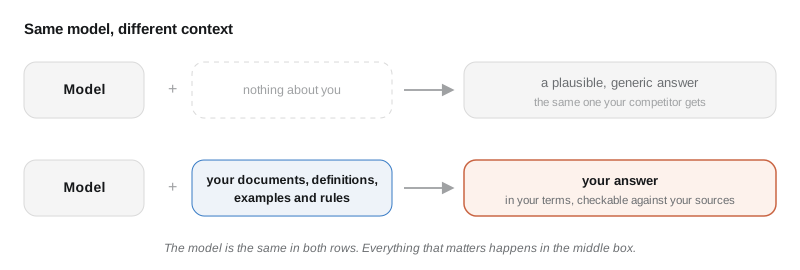
A model with no context produces the same polished, generic answer your competitor gets. A model with your context produces your answer. Same model. The entire difference is what you put in front of it.
So what is context, concretely? In our projects it is four things, in rising order of neglect.
Your documents. Contracts, manuals, tickets, the folder everyone calls the archive. This part everyone understands, and retrieval is now standard engineering.
Your definitions. What "active client" means in your CRM, why there are two revenue fields, which status values are lies. Every company runs on private vocabulary. A model that does not know it answers a different company's question.
Your examples. Ten well-chosen examples of how your best person handles the task teach a model more about your standards than any instruction page. Most companies have never written these down for anyone, including new employees, which is its own finding.
Your rules. What may never be promised, who signs off above what amount, what tone the client expects. The boring constraints that make an answer safe to send.
The engineering, then, is not prompt-writing mystique. It is a pipeline, and one box of it is where the project actually lives.
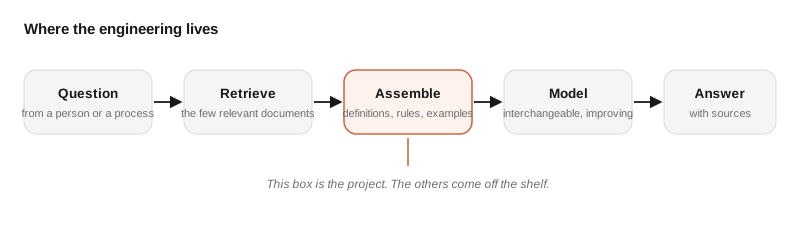
Retrieval finds the few documents that matter. Assembly is the craft: deciding what earns a place in the model's limited attention for this particular question. Too little and the answer goes generic. Too much and the important sentence drowns in noise. The teams that get magical results are not writing better prompts. They are assembling better context, automatically, for every question.
This reframes a few debates that waste a lot of meeting time.
Which model should we use? The one your engineers can operate well, behind an interface that lets you swap it. Models improve monthly. Your assembled context transfers. That asymmetry should drive the architecture.
Why does the chatbot give generic answers? Because it has generic context. The fix is rarely a bigger model. It is teaching the system your definitions and examples, which is unglamorous work a motivated team can do in weeks.
Will the next model generation make this obsolete? The opposite. Better models extract more value from the same context, the way a better chef gets more from the same ingredients. The pantry keeps mattering.
There is also a competitive angle that decision makers consistently underprice. Everyone rents the same models now. Nobody rents your definitions, your examples, your rules. Context is the only part of an AI system that compounds privately, which makes it the only part worth owning outright.
The practical start is smaller than the theory sounds. Pick one task. Collect the ten best past examples of it done well. Write one page of definitions an outsider would need. Wire retrieval over the relevant documents. That is a context system, version one, and it will outperform a model upgrade every time.
The models will keep making headlines. The pantry decides what gets cooked.
Frequently asked questions
What is context in business AI systems?
Everything the model is given about your company at the moment it answers: retrieved documents, your definitions of business terms, worked examples of the task done well, and the rules an answer must respect. It is the difference between a brilliant stranger and a colleague.
Why does our AI give generic answers?
Because it has generic context. A model that knows nothing about your vocabulary, standards and documents can only produce the same polished answer everyone else gets. The fix is usually not a bigger model but a context pipeline: retrieval over your sources plus your definitions and examples.
Does the choice of AI model matter?
Less than the architecture around it. Choose a capable model your team can operate, keep it behind an interface so it can be swapped, and invest the saved energy in context. Models are upgraded monthly and are rented by everyone; assembled context transfers between models and belongs only to you.
What is context engineering in practice?
The pipeline between a question and the model: retrieving the few relevant documents, then assembling definitions, rules and examples into the model's limited attention, automatically, per question. Too little context produces generic answers; too much buries the sentence that mattered. The assembly step is the project.
How should a company start building AI context?
Pick one task. Collect the ten best past examples of it done well, write one page of definitions an outsider would need, and wire retrieval over the documents that task touches. That is a working context system, and it typically beats a model upgrade on answer quality immediately.